





Welcome to the IPGP website
Research themes
News

Key figures

103
years of science for the planet in 2024

4
French active volcanoes monitored by the IPGP

500
members of staff approximately (researchers, engineers, technicians, administrative staff, post-docs and PhD candidates)

1
observatory on Mars (mission completed in 2022)

404
publications in 2022 (including 37 in high impact journals such as Nature, Science and PNAS)

8
locations: Guadeloupe, Martinique, Reunion Island, Chambon-la-Forêt, Champs-sur-Marne and 2 locations in Paris
Agenda
20 Oct
Séminaires Planétologie et Sciences Spatiales
From Fireballs to Moonquakes: the Source Population of Lunar Seismic Impacts
Speaker: Hadrien Devillepoix
22 Oct
Séminaires Systèmes Volcaniques
2025 diking events and eruptions within the Svartsengi volcanic system, Iceland
Speaker: Michelle Maree Parks
28 Oct
Séminaires Géosciences Marines
A seafloor spreading event captured by in-situ seismo-geodetic monitoring
Speaker: Jean-Yves Royer
03 Nov
Séminaires de Sismologie
Towards a Systematic Detection of Mantle-sensitive P-wave Interferences from Oceanic Sources
Speaker: Lisa Tomasetto
Last publications
Labidi Jabrane, Lorand Jean-Pierre, Cartigny Pierre, El Atrassi Fatima. Sulfur isotope evidence for shale recycling in pyroxenites from the Beni Bousera orogenic massif (Morocco); insights on the HIMU mantle endmember. Chemical Geology, Elsevier, 20 December 2026, 726. <10.1016/j.chemgeo.2026.123735>
Besognet Laurie, Debret Baptiste, Rohnke Marcus, Esteve Imène, Corgne Alexandre, Siebert Julien, Ménez Bénédicte. Experimental investigation of a deep organic carbon cycling promoted by carbonate reduction in subduction zones. Earth and Planetary Science Letters, Elsevier, December 2026, 696. <10.1016/j.epsl.2026.120365>
Frey Mathilde, Quidelleur Xavier, Feuillet Nathalie, Médard Étienne, Berthod Carole, Komorowski Jean-Christophe, Puzenat Valentine, Thinon Isabelle, Rinnert Emmanuel, Cathalot Cécile, Jorry Stephan, Paquet Fabien, Lebas Élodie. Timing of volcano-tectonic events in the East Mayotte Volcanic Chain (Comoros Archipelago) since 3.5 Ma. Marine Geology, Elsevier, December 2026, 502. <10.1016/j.margeo.2026.107898>
Kamash Medet, Cochennec Maxime, Baigadilov Adil, van Hullebusch Eric D, Colombano Stéfan. Interfacial behaviour and foam fractionation of PFAS in complex AFFF-related systems. 02 November 2026.
Our observatories
and stations

Mars
InSight National Observation Service
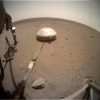
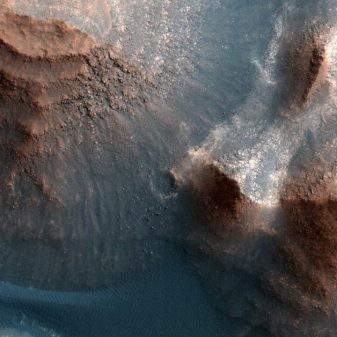
The NASA InSight mission deployed a geophysical observatory on the surface of Mars at the end of 2018, performing simultaneous seismic, geodetic and magnetic measurements. This National Observation Service is supported by the IPGP, together with several French laboratories and observatories (in particular the LPG and GEOAZUR).
More information